Amy Ard, Executive Director and Drew Umberger, Jail Expansion and Diversion Program Manager, Motherhood Beyond Bars
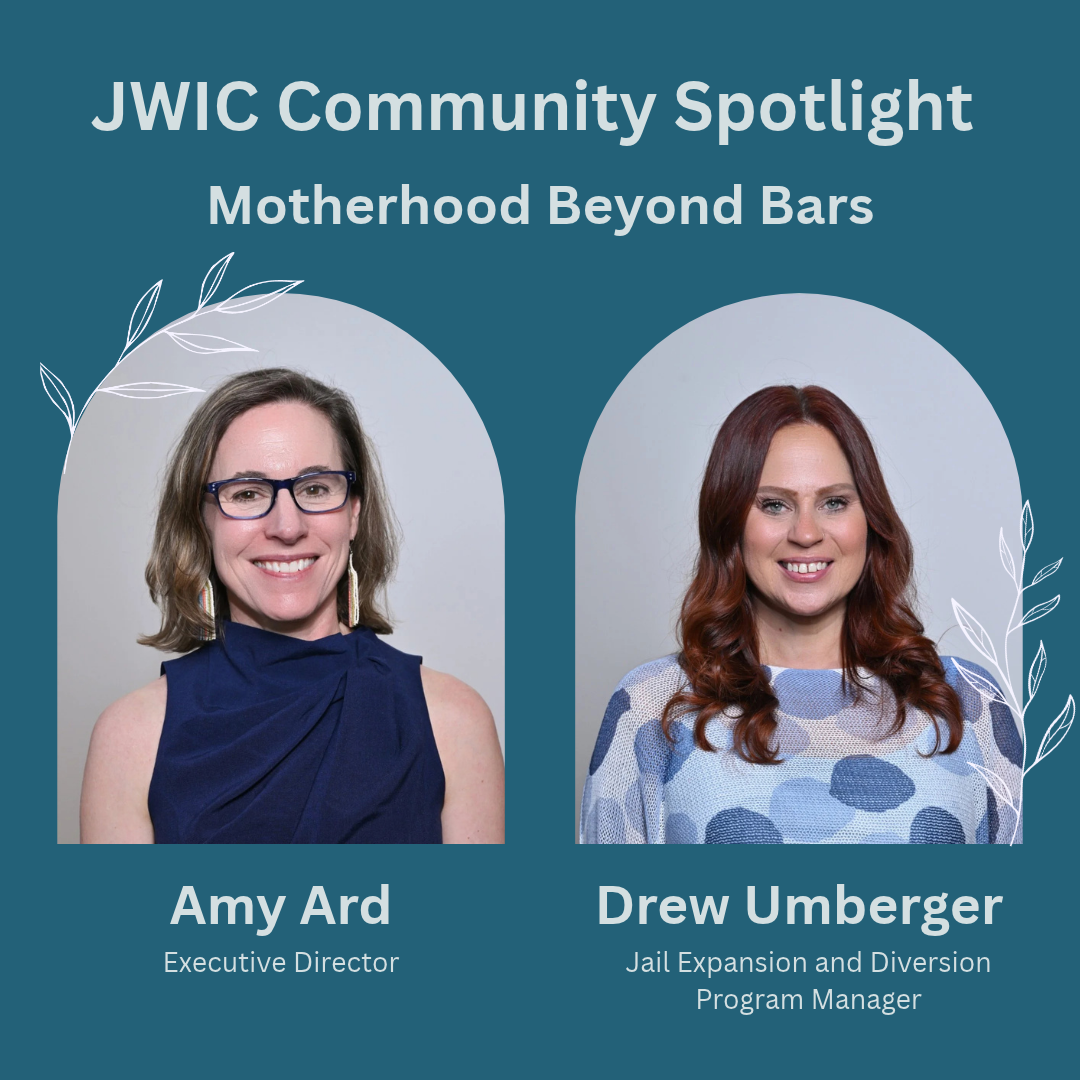 Amy Ard is the executive director of Motherhood Beyond Bars, a Georgia-based nonprofit dedicated to supporting pregnant and postpartum people impacted by incarceration and their families. Amy helped formally establish the organization by building on an existing childbirth education program within Georgia prisons. Since then, she has helped expand the organization’s work to provide comprehensive family support services and promote alternatives to incarceration.
Drew Umberger is the Jail Expansion and Diversion Program Manager at Motherhood Beyond Bars. As a former program participant in 2018, Drew brings both lived experience and professional expertise to her work supporting justice-impacted families. Together, Amy and Drew are working to prevent family separation, expand access to resources, and create pathways toward healing and stability.
Note: This interview has been edited for length and clarity.
For someone who is unfamiliar with Motherhood Beyond Bars, how would you describe the organization and the work you do?
Amy: I describe Motherhood Beyond Bars as a direct service organization. We provide support for any woman who has been pregnant for even one day in a prison or jail in Georgia, as well as her children and the caregivers who may have cared for those children while they were separated. We call this our Holistic Family Support Program. Our goal is to reunite families and mitigate some of the worst impacts of maternal incarceration. Increasingly, we want to prevent incarceration whenever we can.
Over the past eight years we’ve met a lot of women in prison who we knew would have been better served in getting help for the substance use or mental health challenges that ultimately led them to a prison sentence. They weren’t getting better in prison and the impacts of their incarceration now affected their children and entire communities. So two years ago we started focusing on diversion as a primary strategy. And we’re seeing that we can prevent many of these incarcerations and separations before they happen. Our diversion program is one of our newer initiatives, and we’re seeing incredible success in preventing incarceration and connecting women to health and community-based treatment rather than continued incarceration and family separation.
Drew: My job involves building relationships with jails so we can provide childbirth education to pregnant women who are incarcerated. We identify pregnant women through these classes and connect them with our program coordinators, who are the real superheroes of this work.
Our program coordinators help moms with courtroom advocacy, identify caregivers when needed, and navigate reentry. This can include transportation to court, probation appointments, and prenatal care. We also focus on making sure mothers continue receiving medical care and mental health support, including postpartum screenings. We provide six months’ worth of diapers to families with babies born through our jail program, along with car seats and safe places for babies to sleep when needed. Most importantly, we’re there to walk alongside these moms throughout their journeys.
Amy, what led you to working with pregnant and postpartum people impacted by incarceration?
Amy: I was working as a childbirth doula in Washington, D.C., and had been doing birth work for almost 10 years. One day, I walked out of a hospital room to get ice chips for a client and saw a gurney in the hallway with a pair of handcuffs hanging off the side. Then an armed guard walked out of the room next door, and I realized there was a woman chained to a bed in that room. That was the day my world turned a little sideways. I had been working in labor and delivery for nearly 10 years, attending hundreds of births, and it never occurred to me that incarcerated women might also need to give birth until it was happening in the room next door.
I went home and started reading everything I could about pregnancy and incarceration, but there wasn’t much information available. I eventually decided that my home state of Georgia was where I could make the most change. When I moved back to Georgia, I met Bethany Kotlar, who started teaching childbirth classes inside the Georgia prison system. The women participating in those classes named the program Motherhood Beyond Bars. Bethany was preparing to leave Georgia, and I didn’t want the work she had started to disappear. That’s how I became the unpaid executive director of a nonprofit that I then had to form.
We started building on that work, listening carefully to what women were telling us and learning what was happening to their families. In 2020, we expanded beyond supporting women inside of prisons to providing services for their entire families. We believe that building long, healthy, and supportive relationships between mothers and their children is incredibly important, even when they have been separated at birth.
Drew, can you share a little about your journey from being part of the Motherhood Beyond Bars program to the work you’re doing today?
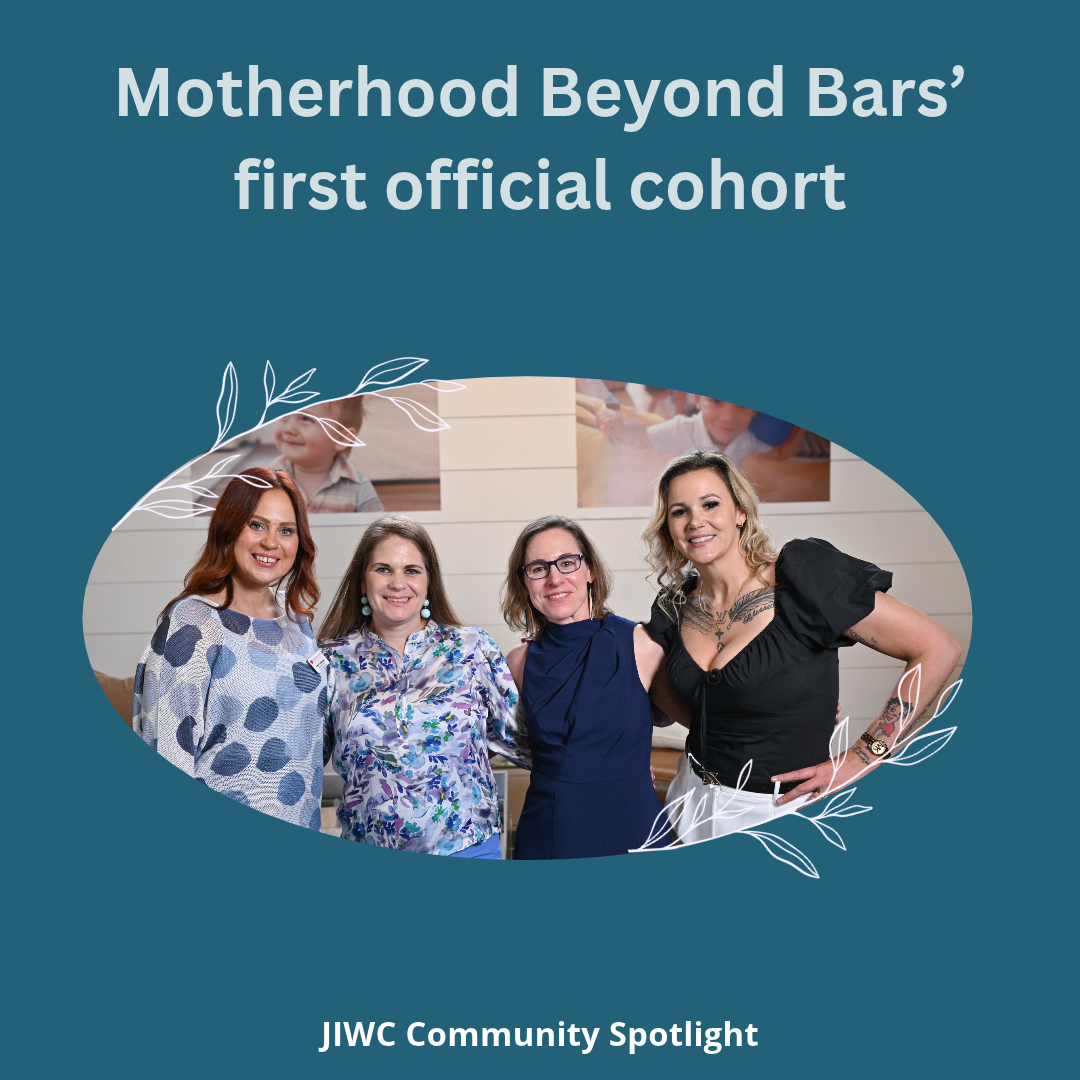 Drew: In July or August of 2018, an officer came to my door at the prison and told me there was a baby shower. At first, I thought they were playing a mean trick on me. But when I walked into the room, there was Amy, smiling really big. The room was decorated with pastel colors, there were bags of gifts, and we played games. It was a baby shower. It was the first time I felt like I was a mom, a human, a person. It was the first time I didn’t feel like a number, and that was impactful. It made a difference in the rest of my time there.
I gave birth on August 15, 2018. I developed preeclampsia and had to have a cesarean section. I got two hours to hold my baby before she was taken to the NICU, and I was taken to a separate hospital unit for incarcerated individuals. We were separated just two hours after her birth. Motherhood Beyond Bars continued to support me through postpartum groups. Those groups gave us a safe space to talk about what it was like to be separated from our babies and the fears we had. In prison, you often have to put on a facade that nothing bothers you, but for one or two hours a week, we could be vulnerable. That was really important because there wasn’t much other mental health support available.
Amy and I stayed in touch throughout my incarceration, and she even testified for me when I was working to get my children back. After my release, I bought my first house, and eventually, my children and I were reunited. We’ve been together for three years now. We’re still learning each other and catching up on time, but I feel like our relationship has been repaired
Drew, based on your experience, what types of support were most meaningful to you, and what do you wish had been available?
Drew: I think it’s about treating people with dignity, not looking at their past and allowing it to define how you view them. I had been in and out of incarceration many times before, but the difference this time was that I had a resource. All it took was one resource, and I ran with it.
I was never offered rehabilitation. The answer was always incarceration, even though every one of my law violations stemmed from opioid dependency. I’m not saying you can’t recover without rehabilitation, because I did. There isn’t just one pathway to recovery. But I think alternative sentencing is imperative to creating safer communities. We need to get creative and address the underlying issues that bring people into the justice system. For me, it was grief. Nobody wakes up one day and decides they want to become dependent on opioids. There is often underlying trauma, and as a community, we need to find better ways to respond to people’s needs instead of just locking them away.
What are some of the biggest challenges pregnant and postpartum people face during incarceration and after returning to their communities?
Drew: During incarceration, mothers are cut off from the outside world and their families. One way we try to fill that gap is by putting money on their phones so they can communicate with their children and caregivers. Keeping that family connection going while incarcerated is really difficult. Another challenge is the court system. Some of our moms wait months before they’re even able to see a judge. Housing is also one of the biggest barriers, especially for pregnant women or mothers who need housing for themselves and their children. There aren’t enough resources for women fleeing domestic violence or those who need stable housing during pregnancy and reentry.
Amy: I would back up even further. We don’t know how many pregnant people are in our prisons and jails. When you don’t understand the scope of the problem, it becomes difficult to figure out how to build solutions. In Georgia, there is no statewide data collection on the number of pregnant women in jails. There also aren’t consistent procedures across facilities, so access to prenatal care, medical services, and family connections can look completely different from one jail to another.
When women return to their communities, they face many of the same challenges as men, including finding housing and employment. But mothers are also trying to figure out how to parent and reunite with their families. Many reentry services are designed primarily for men, leaving significant gaps in support for women and mothers. Our team is uniquely qualified to help fill those gaps. Many of our staff members are certified peer specialists with lived experience of incarceration, substance use, or mental health challenges. They’ve been trained to support others navigating similar experiences. Our success really comes from having a team that believes so deeply in the work we do.
What changes would you most like to see in how pregnant and postpartum people impacted by incarceration and their families are supported?
Drew: I would like to see policies that make prison the last resort . We have drug courts and mental health courts, so why not consider something like a maternal court? Instead of punishing a mom because she doesn’t have resources, help her. One resource led me to stability, which allowed me to provide stability for my children. That also allowed me to repair my relationship with my dad, my brother, and other family members. When you help one person, you’re helping an entire family.
Amy: One thing we’ve discovered through our diversion work is that it often hasn’t been anyone’s job to do the legal work needed to offer an alternative to incarceration. Public defenders are overwhelmed, and sometimes they’re meeting their clients for the first time when they’re standing in front of a judge. That’s often too late to develop an alternative plan. We’ve spent years building relationships with treatment facilities and learning which programs can accommodate pregnant women and mothers with newborns.
When we can go into a courtroom with a treatment placement already arranged, we can offer an alternative that provides rehabilitation, accountability, and an opportunity for mothers and babies to stay together. We can’t be in every courtroom, but we can build a model, gather data, and demonstrate that it works. That’s how systems change can happen. There’s no magic here. It’s building relationships, doing the legwork, and showing that there are better alternatives.
What are you most excited about for the future of Motherhood Beyond Bars?
Drew: I want us to be in all 159 counties in Georgia. Our North Star is that no baby is born in custody. Dreaming really big, I would love to see other states replicate our work and eventually work us out of business so we don’t have to do this anymore.
Amy: I would love for there to no longer be a need for this organization because the world has rearranged itself to care more about healing than punishment.
Thank you to Amy Ard and Drew Umberger for sharing their time, insights, and dedication with JIWCC, and for their continued advocacy and care for families navigating pregnancy and parenting within the carceral setting.