#UMNMCH student Ruth Dele-Oni (MPH 2026) reflects on how her deployment with 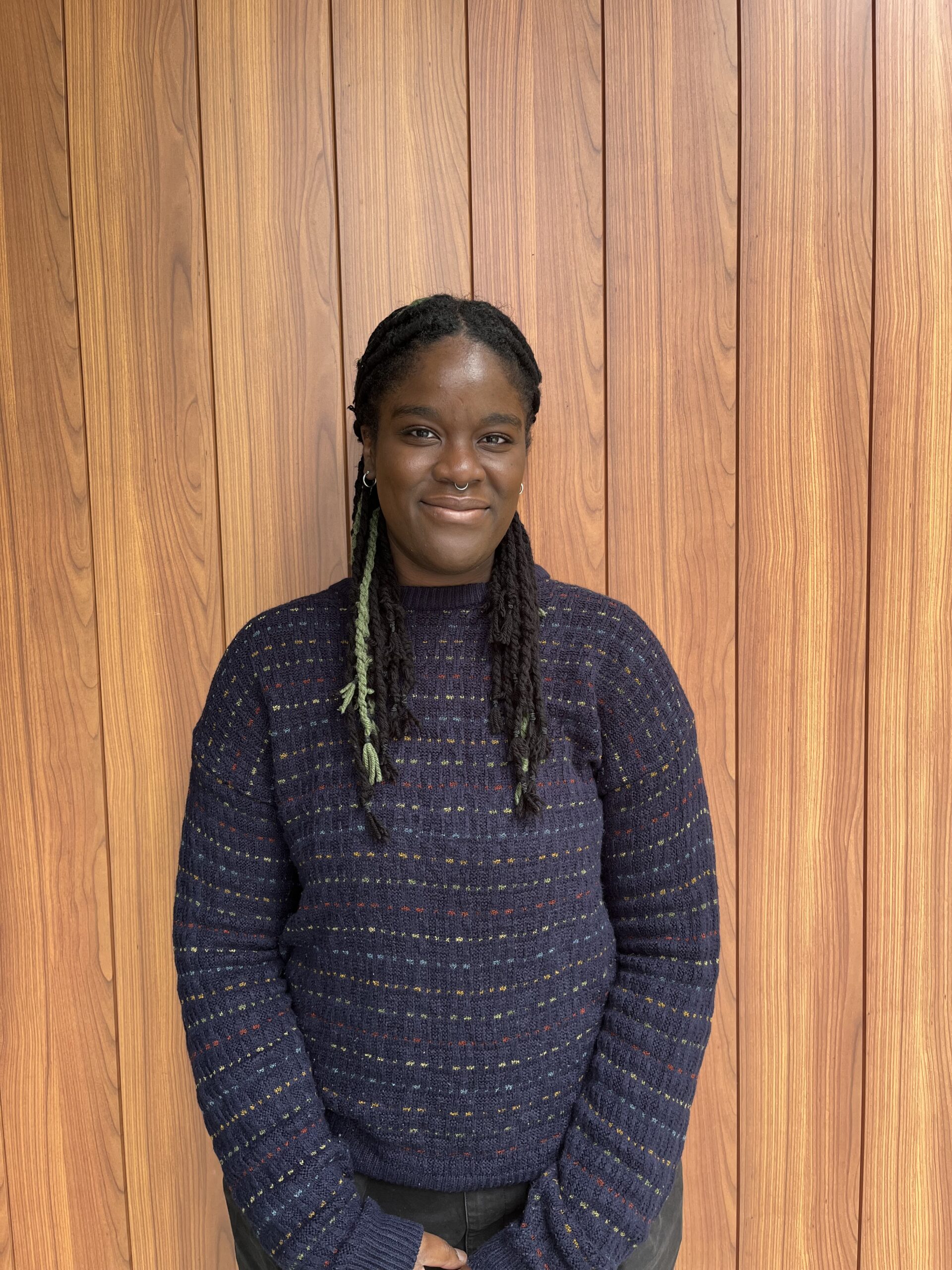 Hennepin County’s Baby Tracks Team has enabled critical research regarding vaccine hesitancy among the Somali population in Minnesota. In this piece, Ruth shares her drive for closing BIPOC maternal and child health (MCH) equity gaps.
My journey to the MCH MPH Program was rather non-linear. While I studied global health in undergrad, I was unsure what sector of public health I wanted to choose as my career focus. After my time as an undergraduate student, my professional experiences largely focused on healthcare and MCH, but it was my experiences in nutritional and environmental education that set off a lightbulb. While managing community gardens, I was blessed to hear the stories of global BIPOC families’ experiences with the social determinants of health. From there, I knew I wanted to return to school and garner skills that would allow me to work effectively in meeting the needs of BIPOC maternal and child populations. This led me to seek out the UMN’s MCH graduate program, as well as a Center deployment, in order to gain direct experience with these populations. So far, my experience in the MCH Program has been nothing short of positive, and has given me avenues, both in my schoolwork and practical experiences, to continuously advocate for BIPOC families. The Program has also highlighted the necessity of interconnected approaches to solving health disparities. Understanding the interplay of oppressive systems like racism and discrimination with accessing necessary goods, environments, and services to remain healthy is pivotal in achieving health equity in comprehensive and sustainable ways, and I continue to dedicate myself to doing public health in this way for the good of those who are too often disregarded in society.
My deployment as a community health assessment intern led me to the Hennepin County’s Baby Tracks team. This program works to provide free services to families to help babies stay up to date with their immunizations. They also host regular free immunization clinics in the county. My work with Hennepin County fell into two camps. First, I conducted a comprehensive literature review on Measles-Mumps-Rubella (MMR) vaccine hesitancy and Autism Spectrum Disorder in the Somali community within the Twin Cities. The purpose of the literature review was to uncover the drivers of MMR vaccine hesitancy in the Somali community and provide science-backed recommendations for public health professionals in Hennepin County to effectively address this area. Current methodologies are not effective, given the recurring measles outbreaks in the Twin Cities, so new approaches needed to be identified. The literature revealed that MMR vaccine hesitancy is driven by a fear of Autism Spectrum Disorder, which is widely prominent in Somali children in the Twin Cities. The unknown etiology of the disorder makes room for the blame to be placed on this particular vaccine. However, poor interactions with healthcare providers who dismiss Somali parents’ concerns, and public health’s blaming of measles outbreaks on Somali populations, also drive MMR vaccine hesitancy further. My recommendations center internal work within systems that focus on cultural humility and building trusting relationships void of blame with the Somali community.
Second, I organized Hennepin County’s Annual National Infant Immunization Week event that took place in April 2025 in order to promote the importance of childhood vaccinations in preventing disease. My work in organizing Hennepin’s 2025 event was to raise awareness about local MCH organizations, as well as conduct an immunization clinic for the pediatric organization. The health fair portion of the event included 8 different community organizations that work with families, and the immunization portion provided vaccines to attendees. The event was a tremendous success with great turnout. The team administered over 50 vaccines!
The L.I.F.E (Leadership, Interdisciplinary, Family-centered, and Equity) framework is a tool used to categorize the MCH Leadership competencies. The areas of the L.I.F.E. Framework that I addressed in this internship include: self-reflection, communication, working with communities/systems, and cultural competency. This internship prompted a lot of self-reflection, and in turn, made me a better public health professional. I was challenged to analyze how I viewed populations who are vaccine hesitant, and question the mechanisms that make people come to that conclusion. In holding empathy, I was able to critically examine antiquated public health methodologies that in turn drive the health disparities they claim to address. This work made me more community-oriented, wanting to focus on how I can best utilize my skill set to collaborate with community members to best meet their needs. Additionally, my communication styles were fine-tuned toward cultural humility. In uncovering the ineffective ways public health interacts with marginalized populations, I was attentive in changing how I presented information depending on the audience, all in the pursuit of being an effective communicator. All of these have granted me the ability to “do public health better” and will be things I continue to carry with me for the rest of my life.
BIO
Ruth Dele-Oni (she/her/hers) is a second year MCH MPH student, with minors in Epidemiology and Environmental Health. Prior to graduate school, Ruth received her B.S. from Boston University in 2020.
Interested in learning more about getting a degree in MCH? Visit our MCH Program page for more information.
#UMNMCH #UMNproud #UMNdriven