The Mini-Lab is a collaboration between the MCHB-funded Leadership Education and Training (LET) Program in MCH Nutrition and the Center.
Fall 2025
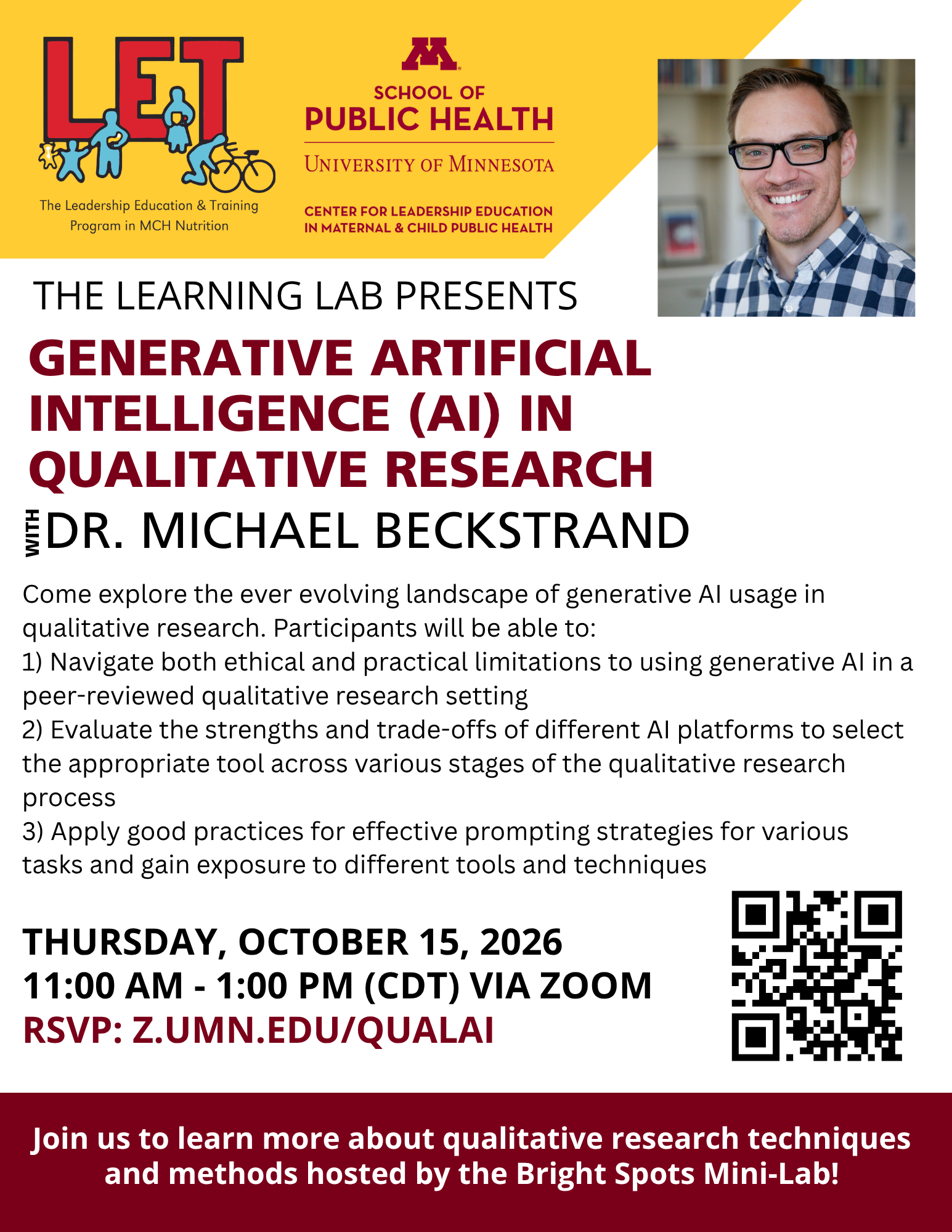
Using Generative Artificial Intelligence (AI) in Qualitative Research with Michael Beckstrand (via Zoom) | Thursday, Nov 20, 2025 | 11am-1pm CT
Come explore the current landscape of generative AI usage in qualitative research, covering tasks ranging from automated transcription to generating summaries or coding suggestions. This session will provide concrete examples of how to use tools like OpenAI’s Whisper for transcription and Google Gemini models into your workflow, as well as show how generative AI features have been integrated into qualitative analysis tools like NVivo. There will be time for hands-on exploration, and plenty of opportunity for discussion and grappling with both the opportunities and challenges presented by generative AI. Please consult your institution’s opt-in policies for Gemini and NotebookLM prior to the session. UMN affiliates should opt-in using z.umn.edu/geminioptin and z.umn.edu/notebooklmoptin.
Participants will:
1) Understand several generative AI tools and their potential use in qualitative research
2) Identify multiple points in a research workflow where generative AI might be useful
3) Navigate both ethical and practical limitations to using generative AI in a peer-reviewed research setting
The goal of the Mini-Lab is to support the growing interest in qualitative and mixed methods research among public health researchers and public health practitioners. We integrate the rich tradition of qualitative inquiry into current public health research so participants can gain a deeper understanding of the public health needs facing our communities, integrate the experiences and perspectives of key stakeholders and community members into research designs, and find solutions to public health problems that take into account the lived experiences of community members.
The Mini-Lab offers participants the space to build or augment the qualitative research skills they’ve learned in classrooms or while at work in their agencies. Together with trainers, MCH and nutrition students, faculty and other MCH and nutrition colleagues, participants gather regularly for training sessions labs that provide them with an opportunity to consult with experts on activities that strengthen their skills.
When students, agency staff and faculty utilize the same approach to research methods and the same software for data analysis and management—and when those data are shared—we can collectively work toward improving the health of our most vulnerable populations.
The use of qualitative research is critical for public health professionals wishing to gain a deeper understanding of the lived experiences of individuals and communities through the systematic study and analysis of non-numeric data.
Focus groups, observations, case studies, one-on-one interviews, and other qualitative data collection methods can provide important insights into and answer questions about the way individuals and communities experience health and illness, and make sense of everyday life.
Quantitative analysis skills are necessary for current and future public health professionals, but they often want deeper insights into actions, ideas and behaviors that could improve health and bolster effective health promotion. The qualitative research methods lab (affectionately called the “mini-lab”) was born out of our desire to be responsive to the needs of public health practitioners and graduate students.
In 2023-2024 we hosted four Learning Lab workshops: Template Analysis as a Method for Rapid Qualitative Inquiry in Public Health Research with Patrick Brady and Dr. Grace Ryan, Introduction to Online Focus Groups with Dr. Richard Krueger, Template Analysis as a Method for Rapid Qualitative Inquiry in Public Health Research (Part 2) with Patrick Brady and Dr. Grace Ryan, and Introductory NVivo Workshop with Michael Beckstrand.
2022-2023
In 2022-2023 we hosted four Learning Lab workshops: Positive Deviance with Dr. Alex Foster, Introduction to Coding Techniques with Dr. Johnny Saldaña, Parenting Practices and Childhood Obesity: A Positive Deviance Approach with Dr. Junia de Brito, and The Power of First Person Storytelling in Public Health with Allison Myers.
2021-2022
In 2021-2022 we hosted four Learning Lab workshops: Introduction to Citizen Research with Dr. Stuart Grande, Introduction to NVivo with Junia N. de Brito, Rapid Qualitative Data Analysis in Public Health Practice with Prof. Johnny Saldaña, and Introduction to Ripple Effects Mapping with Dr. Scott Chazdon.
2020-2021
In 2020-2021 we launched introductory sessions through Mini-Lab “Learning Labs” which included: Introduction to Facilitation Skills with Dr. Richard Krueger and Dr. Mary Anne Casey, Introduction to Online Focus Groups with Dr. J. Michael Wilkerson, Advocacy through Storytelling with Carol Dreibelbis, Introduction to NVivo with Junia N de Brito, Introduction to Photovoice with Dr. Fernando Ona and Introduction to Walk-Along with Dr. Carolyn Porta.
2019-2020
In 2019 and early 2020, MCH and MCH Nutrition Trainees continued working on a positive deviance research project. Throughout this experience, trainees conducted qualitative research interviews with caretakers and received transcription training once the interviews concluded. During the summer, MCH and MCH Nutrition Trainees received introductory lessons and training sessions on Mendeley and NVivo.
2018-2019
In 2018, Drs. Jamie Stang and Zobeida Bonilla devoted part of their efforts developing agency-University partnerships and building the mini-lab’s infrastructure.
In 2019, the cohort met with a particular focus on reducing the prevalence of child obesity among vulnerable, diverse populations in Minnesota through the use of a “positive deviance” approach to child obesity prevention, and to share successful strategies with other states and communities.
Trainings included:
NVivo and atlas.ti training, mixed methods research design (Michael Besckstrand)
Case studies, participant observations, interviews, qualitative data analysis techniques (Peter Demerath)
The Mini-Lab has two NVivo licenses that can be accessed remotely by UMN MCH and Nutrition students and their community partners.
Are you a UMN MCH or Nutrition student? Email minilab@umn.edu with the subject “NVivo Usage” and we will get back to you with a link that you can use to check out an NVivo license in two hour increments.
Emails are answered between 8 am-4:30 pm CT, M-F. Please plan accordingly.
Note:
–NVivo use is on a first come, first served basis
–Reservation increments are two hours long
–Users are limited to a certain number of hours per week
–Please be mindful of other people’s need to utilize NVivo by sticking to your time limit
Are you a UMN EpiCH or other student? Email epihelp@umn.edu to request access to the Division of EpiCH’s two NVivo licenses.
Calendar
You can access Mini-Lab training dates, times and other details by visiting our Mini-Lab calendar.
The Lab
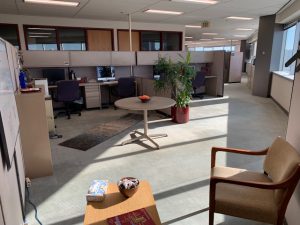
The Mini-Lab is located in the West Bank Office Building (Rooms 328A|328B). Participants can access the lab during office hours (8-4:30 pm, M-F, excluding University holidays). Computer stations are available to reserve at this link. Please email minilab @ umn.edu if you have questions about accessing the lab.
Parking
Please park in the surface lot of the West Bank Office Building. We may be able to provide you with 4-hour parking vouchers that will allow you to get out of the lot without charge. If you need a voucher, please contact minilab@umn.edu at least one week in advance so that we can arrange to get the appropriate number of parking vouchers to you.
Storing your data
Data cannot be permanently stored on lab computers, nor should storage devices should be left in the min-lab. Files should be kept on external hard drives, flash drives, etc. You are welcome to bring your own, or you can let us know and we will arrange to have some on hand for you.
Mini-Lab Survey
We are wanting to monitor and improve the resources at the Mini-Lab. We ask participants and users of the Mini-Lab to complete this short survey.
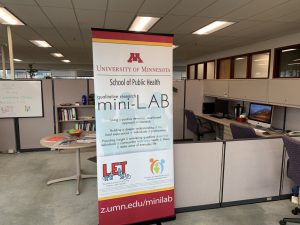
The Mini-Lab is on the 3rd floor of the West Bank Office Building (WBOB Rm 328A|328B), located on the West Bank of the UMN campus. This quiet, sunlit space provides several comfortable places to gather for discussions. It can also be easily transformed for in-person trainings by skilled instructors, or be configured to build skills-based software tutorials.
Mini-Lab participants have access to the following:
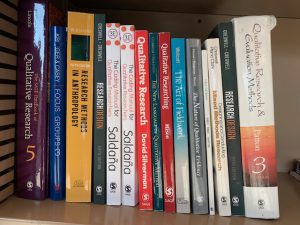
Computers and equipment for data entry and analysis (first come, first served)
The Learning Lab Series began in Fall 2020. This series is dedicated to introducing MCH and PHN students and practitioners to the principles of qualitative data collection techniques.
Spring 2024
Template Analysis as a Method for Rapid Qualitative Inquiry in Public Health Research (Part 2)
Introductory NVivo Workshop
Fall 2023
Template Analysis as a Method for Rapid Qualitative Inquiry in Public Health Research
Introduction to Online Focus Groups
Spring 2023
Parenting Practices and Childhood Obesity: A Positive Deviance Approach
The Power of First Person Storytelling in Public Health
If you’re interested in learning more about or participating in the Mini-Lab, please contact:
Dr. Zobeida Bonilla, Center for Leadership Education in Maternal and Child Public Health
1300 S. 2nd St., WBOB 328A|328B
Minneapolis, MN 55455
zbonilla @ umn.edu | 612-626-1733
Charlotte Stow
Research Assistant for the Bright Spots Mini-Lab
minilab @ umn.edu
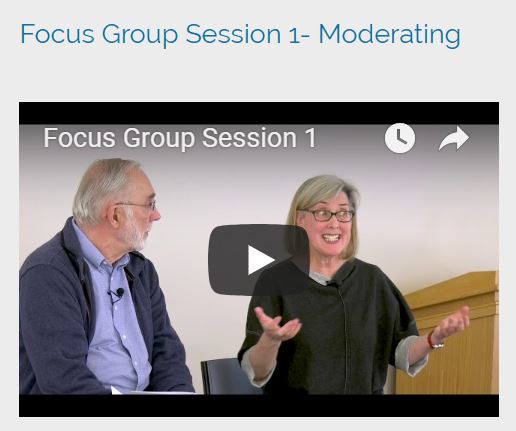
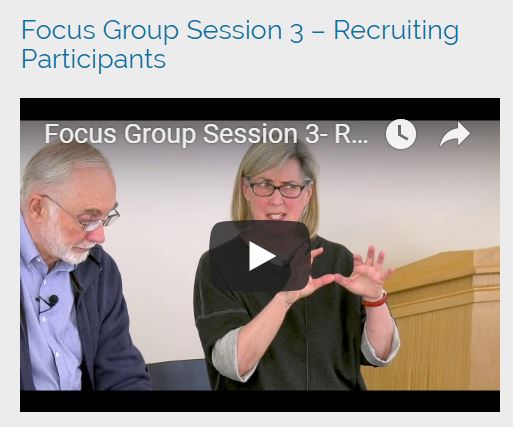
A full list of Learning Lab training videos can be found on our YouTube Channel!
Reviving the Lost Approach of 18th Century Salons with Stuart Grande:
Mini-Lab activities help build the qualitative and mixed methods skills of students and public health practitioners.
Mini-Lab activities foster research and evaluation collaborations to find solutions to MCH public health needs by identifying and employing responsive, asset-based strategies rooted in the perspectives and experiences of individuals, families and communities.